Websites · Marketing
Landing Page or Full Website? How to Choose for Your Next Campaign
Choose the right size project for a new service, promotion, or social campaign. A focused landing page and a full website solve different customer questions.
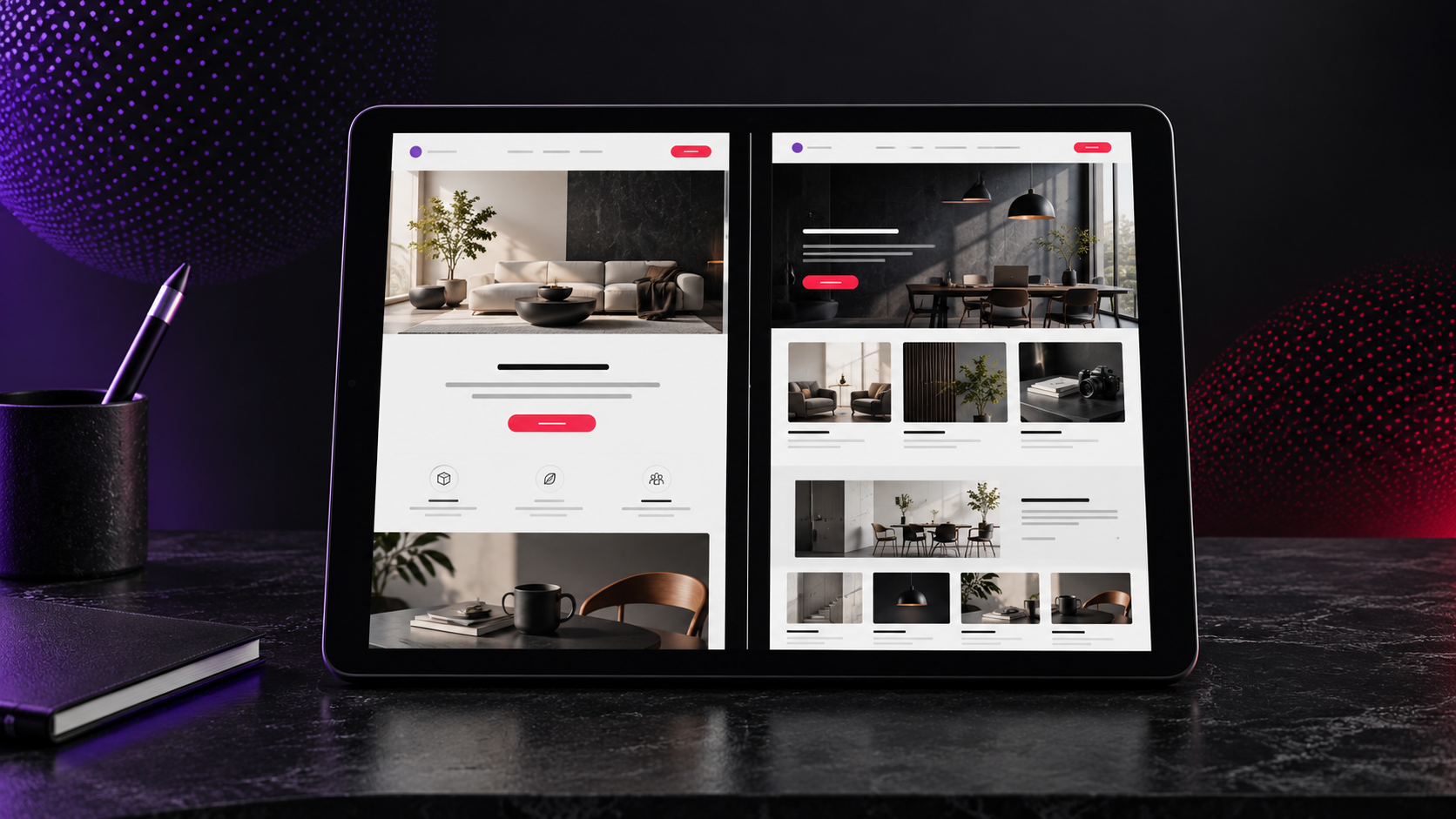
A landing page is a focused destination for a specific offer or audience. A full website explains the business more broadly through several connected pages.
Choose a landing page when you need to promote one clear offer. Choose a full website when customers need to explore different services, locations, products, or questions before deciding. Many businesses need both at different stages.
Start with the decision you want visitors to make
Describe the next action in one sentence. Examples include requesting a quote for patio covers, booking an introductory consultation, or asking about a creator editing package.
If the campaign has one audience and one main action, a landing page can keep the explanation focused. If visitors need to choose among several services or learn about the company first, a broader website gives that information room.
Avoid starting with a page count. Start with the questions a customer needs answered.
Use a landing page for a specific offer
A useful landing page usually explains who the offer is for, what is included, relevant proof, common objections, and how to act.
For example, a local contractor promoting outdoor kitchens could use one focused page with real project photos, service-area information, a scope overview, and a quote form. That is a sample structure, not a claim about a particular contractor’s campaign.
The page should match the message that brought the person there. A social video, email, or advertisement about one service should not send visitors to a generic page that makes them search for it.
Our Google Ads landing page checklist covers another version of this same decision.
Use a full website when the business needs explanation
A full site is more appropriate when the customer needs to compare services, understand different locations, read project information, or find ongoing resources.
Useful pages might include:
- An overview of the business.
- Separate pages for genuinely different services.
- Real work samples or project explanations.
- About and contact information.
- Answers to recurring customer questions.
Each page should have a purpose. Creating a large number of near-identical pages does not make the business easier to understand.
For local companies, the service-area page guide explains how to assess geographic pages without producing repetitive copy.
Improve an existing page before rebuilding everything
If your current website represents the business accurately, a new campaign page may solve the immediate problem. It can use the existing navigation, domain, inquiry system, and visual identity.
A full rebuild makes more sense when the site has several connected problems: confusing content, poor mobile usability, outdated services, difficult editing, or broken inquiry handling.
Write down the specific problem before asking for a quote. “We need an easier quote path for this service” is more actionable than “the website needs to be better.”
Compare the actual scope, not only the price
A landing page is smaller in page count, but it can still require strategy, copy, design, development, photography, integrations, and testing.
Ask what the quote includes, who supplies materials, how inquiries are delivered, and what ongoing costs remain. Confirm how the business will update the page when the offer changes.
Royal Studios standalone websites start at $2,000. Standard website setup is $1,000 when starting a monthly marketing program, with marketing programs starting at $700 per month. The setup fee is separate, and final scope is agreed before work begins. See current pricing and terms. A smaller or more complex campaign project should be scoped directly rather than assuming those figures fit every build.
Give either option a proper launch check
Test the layout on a phone, submit the form, verify the destination inbox, and check the links. Use a clear page title and a description that accurately represents the content.
Keep useful information readable without requiring a video or download. Google’s people-first content guidance emphasizes helping the intended audience; that is a useful editorial standard for either type of page.
If you are unsure how much to build, tell Royal Studios about the offer, audience, and next action. We can help define the smallest project that answers the customer’s real questions.